
From the Glottis to the Pelvic Floor: Clinical Connections

From the Glottis to the Pelvic Floor: Clinical Connections
This course includes
The instructors
Overview
Most pelvic health courses start at the pelvic floor and stay there. This one starts at the glottis — and in doing so, fundamentally reframes how you understand the pressure system your patients live in every day.
Julie Wiebe and Susan Clinton have built a 2.75-hour conceptual course that traces the anatomical, neurophysiological, and mechanical connections running from the larynx and upper airway through the diaphragm and down to the pelvic floor, arguing convincingly that treating the pelvis in isolation is leaving significant clinical gains on the table.
The course addresses how faulty breathing mechanics, glottal compensations, spinal alignment, and autonomic nervous system tone all feed into the same pressure environment that drives continence, prolapse, lumbopelvic pain, and movement dysfunction. If you have ever discharged a patient who did everything right and still had symptoms, or prescribed a kegel program and wondered why it wasn't enough, this course is the missing clinical context.
Learning Objectives
By the end of this course, you will be able to:
- Describe the function of three anatomical components of the epiglottal system, including the role of the glottis in airway protection, phonation, and breathing coordination with the diaphragm.
- Identify three steps in the trigeminal/vagal alarm system and explain how this system mediates cervical muscle tone, breathing pattern, and downstream effects on pelvic floor function.
- Discuss three pieces of evidence linking the intra-abdominal pressure system and pelvic health dysfunction, including the relationship between thoracic alignment and pelvic organ prolapse.
- Develop three intervention strategies that address pelvic health considerations within therapeutic exercise programs for orthopaedic and sports medicine populations.
- Integrate breath mechanics and vocalization strategies into three transitional movement patterns — such as sit-to-stand, lifting, and squatting — using variable input approaches.
- Justify three upper airway intervention strategies (using speech, swallow, or respiration) within a treatment program for patients presenting with low back pain and incontinence.
- Explain the relationship between spinal alignment, intra-abdominal pressure management, and the prevalence of pelvic organ prolapse, drawing on current evidence.
Audience
This course is designed for physiotherapists, occupational therapists, athletic therapists, and kinesiologists who want to move beyond isolated pelvic floor treatment and toward a whole-system approach to proximal control, movement, and function. It is particularly well-suited to pelvic health physiotherapists who regularly encounter patients with persistent or complex presentations that don't resolve with standard pelvic floor rehabilitation, as well as orthopaedic and sports medicine clinicians who want to understand why pelvic health considerations belong in their practice too.
PTAs and OTAs will gain valuable context for understanding the reasoning behind integrated, multi-system treatment plans. Athletic trainers and kinesiologists working with high-performance or active populations will find the pressure management and movement strategy content directly applicable to training program design. All practitioners should apply course content within their jurisdictional scope of practice.
Why This Course Matters
The clinical model most practitioners were trained in treats the pelvic floor as a local structure managed through isolated strengthening or relaxation — but the research increasingly does not support that lens.
Faulty breathing patterns have stronger documented associations with back pain than obesity or physical activity levels, and the upper respiratory system exerts direct neurophysiological influence on the very muscles clinicians most commonly try to rehabilitate in the pelvis. The diaphragm, glottis, hyoid, and cervical musculature are not separate from pelvic health — they are upstream contributors to it.
What this course offers is the clinical architecture to connect those dots: a framework for understanding how alignment, respiration, intra-abdominal pressure, and autonomic tone interact in real patients, and practical strategies for using that understanding to improve outcomes. For clinicians who work with athletic or active populations, this is especially pressing — pelvic floor dysfunction in female athletes is well-documented and frequently undertreated, in part because the tools being used don't account for the demands that performance environments place on the whole pressure system.
This course includes prescribable patient exercises available through your Embodia membership.
Related Learning
You can find additional resources on this topic below:
- Pelvic Health Intake Forms, Outcome Measures & Chart Templates in Embodia — relevant for clinicians who take this course and want to update their pelvic health intake workflow.
- Pelvic Health, Female Athletes & Performance: What If Our Model Is Wrong? — the Embodia blog post on pelvic health and female athletes aligns directly with the athletic population content in this course.
- Embodia Pelvic Health courses — a filtered view of pelvic health continuing education would give clinicians a path to other related content after purchasing this course.
The instructors

PT, DPT Clinician/Educator
Julie W. Wiebe, PT, DPT (she/her) has over 28 years of clinical experience in Sports Medicine and Pelvic Health, specializing in abdominopelvic, pregnancy, postpartum, and performance health for fit and athletic populations. Utilizing a systems-thinking model to optimize pelvic health integratively, her external, movement-based strategies have been successfully incorporated into a variety of populations by medical, rehab, and fitness professionals (ortho/sports, pelvic health, neurology, and pediatrics). Dr. Wiebe is a dedicated educator and sought-after speaker, delivering evidenced-based professional development lectures, curriculum, and coursework at clinics, academic institutions, residencies, and conferences internationally.

PT, DScPT, OCS, WCS, COMT, FAAOMPT WHC NBC-HWC
Dr. Clinton is an award-winning physical therapist in professional achievement and the owner of LTI Physio in Sault Ste. Marie, MI. Susan is board certified in orthopedic and women’s health physical therapy, a fellow of the American Academy of Orthopedic Manual Therapy, and a board certified health and wellness coach.
She is an international instructor/mentor of post-professional education in women’s health (including GI issues in women), orthopedic manual therapy, health/wellness coaching for the health care practitioner and business psychology. She is on faculty at Andrews University in the Doctor of Science in PT program, a Master Coach for the Integrative Women’s Health Institute, a reviewer for the Journal of Womens Health Physical Therapy and a clinical faculty instructor for the North American Institute of Orthopedic Manual Therapy and ASPIRE. She is also an active author in research and blog posts, and is an active professional/clinical mentor. Susan is the co-founder and board member for the foundation: Global Women’s Health Initiative. She is also the co-host of the 5 five-star podcast, “Tough to Treat,” the guide to treating complex patients, and “The Genius Project,” reframing the treatment of persistent musculoskeletal pain.
Susan enjoys walking / hiking, country line dance and ballroom, and is an avid supporter of music, the arts, and international objectives for women’s health.
Material included in this course
-
From the Glottis to the Pelvic Floor: Making Clinical Connections (Part One)
-
Course Power Point PDF
-
Course Outline with References
-
Course Bibliography
-
From the Glottis to the Pelvic Floor (Part One)
-
Feedback
-
From the Glottis to the Pelvic Floor: Making Clinical Connections (Part Two)
-
From the Glottis to the Pelvic Floor (Part Two)
-
Feedback
-
Have content or tech Questions? Want more info and conversation?
-
Have Content or Tech Questions? Join the Conversation with Like Minded Colleagues
Patient exercises included in this course
-
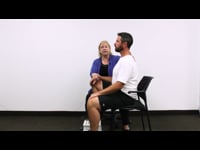
Toileting Position
-
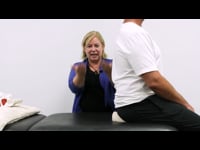
Relief Position for Coccydynia
-
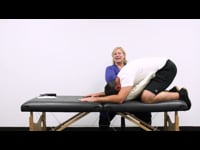
Child's Pose for Rectal Pain
Is a certificate of completion included with this course?
Once you have completed the course, a certificate of completion (including learning hours and course information) will be generated. You can download this certificate at any time. To learn more about course certificates on Embodia please visit this guide.
This can be used for continuing education credits, depending on your professional college or association. If this course has been approved for CEUs in specific jurisdictions, it will be noted on the course page and CEU information may be added to your course certificate. Please read this guide for more information.
This course has exercises. Can I prescribe them to my patients?
Yes, exercises included in courses or resource packages on Embodia can be prescribed directly through the Embodia platform. A Tier 2 or 3 Membership is required to prescribe exercises. These memberships include a range of other features. You can learn about home exercise programs (HEP) on Embodia here, and about memberships on Embodia here.